

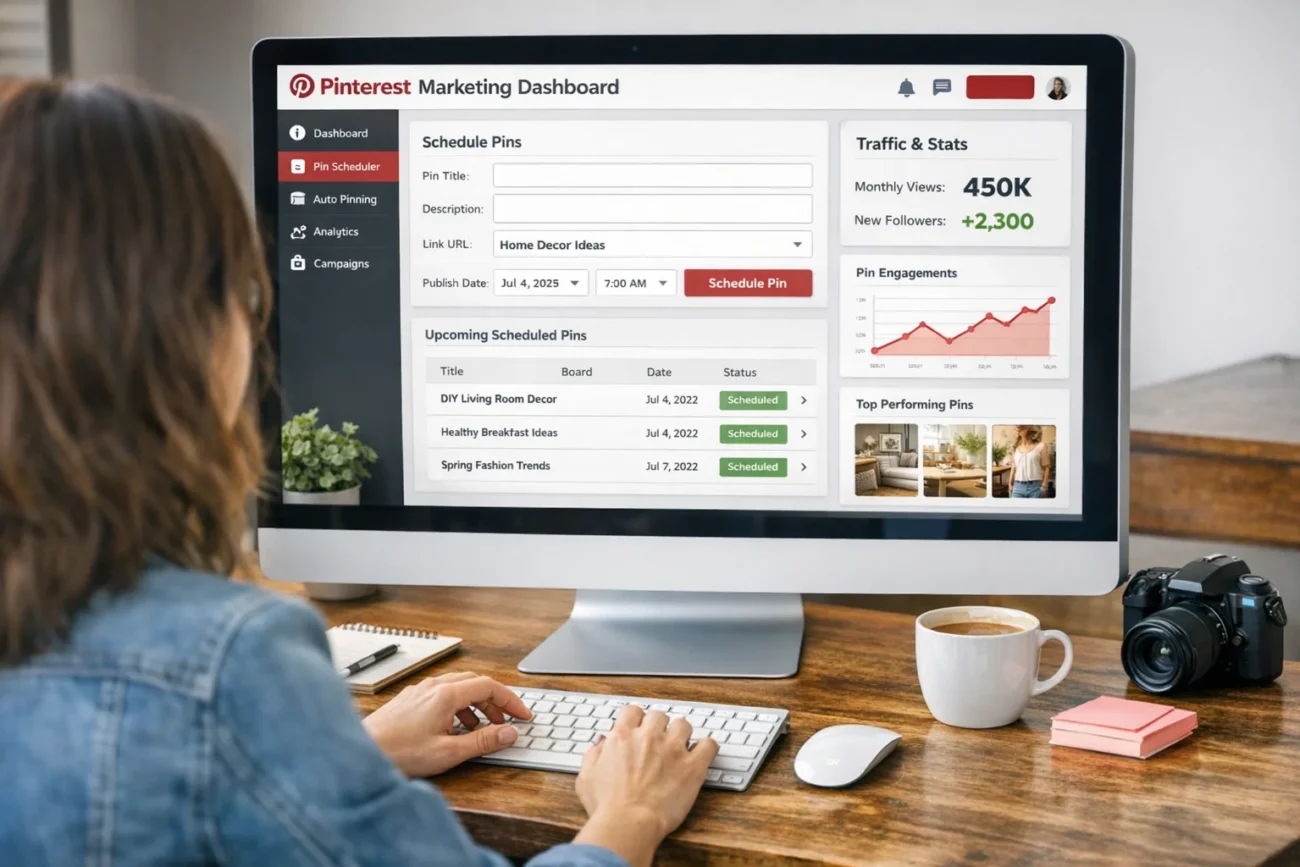
Pinterest Automation: How 3,000+ Marketers Get Free Buyer Traffic Daily
You’ve been paying for traffic — or worse, grinding for it — while a platform with over 500 million monthly active users sits largely untapped, packed with people who already want to buy something.
That platform is Pinterest. And if you’re not pulling traffic from it on autopilot right now, you’re leaving buyers on the table every single day.
This post is for the marketer who’s tired of Facebook ad costs eating into margins, Google SEO taking 6 months to move the needle, and content that gets zero traction after hours of work. By the end, you’ll understand exactly why Pinterest works differently from every other platform — and how to set up a system that delivers targeted buyer traffic without turning it into a second job.
Why Your Current Traffic Strategy Is Making This Harder Than It Needs to Be
Most marketers trying to grow online reach for the same three levers: paid ads, SEO, or social media hustle. Each has a ceiling problem.
Paid ads work until your budget dries up — and with CPCs rising across Meta and Google year over year, your margin shrinks with every campaign.
SEO is a long game. New content can take 6–12 months to rank, and algorithm updates can erase months of work overnight.
Organic social on Instagram, X, or Facebook requires constant posting into increasingly crowded feeds where organic reach has collapsed. You’re essentially renting attention in someone else’s algorithm — and they keep changing the rent.
None of these are broken strategies. They’re just brutally competitive. If you want a fuller picture of how these free traffic channels stack up against each other, this breakdown of the best free traffic sources for affiliate marketers ranks each one by buyer intent and ease of entry — useful context before going all-in on any single channel.
The mistake isn’t using them — it’s only using them while ignoring a platform that’s structurally different in one important way: Pinterest users arrive with purchase intent baked in. They’re not doom-scrolling. They’re planning. And that changes everything about how easy it is to convert them.
What Makes Pinterest Traffic Different (And Why Automation Changes the Math)
Why does Pinterest convert better than other social platforms?
Pinterest is a search-and-save engine, not a social feed. When someone opens Pinterest, they’re typically in a planning or buying mindset — searching for home decor ideas, recipes, workout programs, product comparisons, or gift ideas. According to Pinterest’s own business research, the vast majority of weekly Pinners have discovered a new brand or product on the platform — making it one of the highest-intent discovery environments online.
That buyer intent is the key insight. You’re not interrupting someone mid-scroll — you’re showing up exactly when they’re looking for what you sell.
The second insight is that Pinterest content has a much longer shelf life than posts on other platforms. A pin can drive traffic for months or years after it’s published. Instagram posts are essentially dead within 48 hours. A well-optimized pin compounds over time — a point backed up by Statista’s analysis of Pinterest engagement patterns, which shows consistent growth in active users who return specifically to search and save content.
But here’s the problem: capitalizing on Pinterest manually is genuinely time-consuming. You need to:
- Find quality content in your niche to pin and repin
- Maintain consistent posting schedules (Pinterest’s algorithm rewards frequency)
- Manage follows and unfollows to grow your audience
- Write fresh descriptions for every pin to avoid being flagged as duplicate content
- Track which boards and keywords are actually driving traffic
Do all of that for even two boards in one niche and you’re looking at 1–2 hours a day. Scale to multiple niches or client accounts and it becomes a full-time job.
That’s exactly why Pinterest marketing automation tools exist — and why the right one changes the math entirely.
How Pinterest Automation Actually Works (Step by Step)
Before any automation makes sense, your account foundation needs to be solid. If you haven’t set yours up yet — or you’re not sure it’s configured correctly — this guide on how to set up a Pinterest business account from scratch covers everything from profile optimization to board structure and Rich Pins. It’s worth 10 minutes before you build anything on top of it.
Once the foundation is in place, here’s how an automated Pinterest marketing system operates:
Step 1: Keyword and niche setup. You connect your Pinterest account and configure the niches and keywords relevant to your offer. The software uses these to find relevant content, boards, and users automatically.
Step 2: Content discovery and scheduling. Instead of manually searching for pins to share, the tool continuously finds high-quality content from your niche. It schedules pins to go out at optimal times — so your boards stay active without you touching them daily.
Step 3: Smart repinning with AI rewriting. Rather than copying content verbatim (which Pinterest penalizes), good automation tools rewrite titles and descriptions automatically using AI — so each reposted pin reads as fresh, original content on your profile.
Step 4: Audience growth via follow/unfollow. The software follows accounts in your niche, earning follow-backs organically. Users who don’t follow back are automatically unfollowed to keep your ratio clean.
Step 5: Tracking and optimization. You get reporting on every action the tool takes — what’s working, which boards are growing, and where traffic is coming from.
This is the full workflow that Pinflux has systematised into a point-and-click interface. It handles all five steps without API credentials or technical setup — a genuinely rare combination in this category.
What Results Look Like: Realistic Expectations
Let’s be specific, because vague promises don’t help anyone make a real decision.
Weeks 1–2: Account growth is the priority. You’re building followers, populating your boards with relevant content, and establishing a posting cadence. Traffic from Pinterest at this stage is modest — think dozens of click-throughs per week, not hundreds.
Weeks 3–6: Pinterest’s algorithm begins to recognize your boards as active, relevant sources in your niche. Repins compound — your content gets reshared by others. Click-through rates to your linked offers start climbing. Users in Pinflux’s community report this as the phase where things “click.”
Month 2 and beyond: With consistent automated activity across even 2–3 boards, marketers using this approach report steady streams of targeted visitors — the kind who arrive having already searched for exactly what’s being offered. Affiliate marketers, ecommerce sellers, bloggers, and service providers are all represented in the 3,000+ active user base.
These aren’t viral spikes. They’re compounding, sustainable traffic flows — which is the kind that actually builds a business. The 30-day refund policy means there’s no risk to testing the results in your specific niche before committing long-term.
Pinterest is the one major traffic platform where buyer intent is the default — not the exception. The reason most marketers haven’t captured it is simple: doing it properly at scale is time-intensive without the right infrastructure.
Automation solves that problem. And once the system is running, it works in the background while you focus on everything else.
If you want to see exactly how Pinflux handles the automation — including the AI rewriting features and multi-board scheduling — take a look at what it does here. The setup is genuinely straightforward, and the 30-day guarantee removes the risk of testing it in your niche.
The marketers already winning on Pinterest got there first. The window to do the same is still open — but platforms don’t stay uncrowded forever.
Frequently Asked Questions
Is Pinterest marketing automation safe for my account? Yes, when done correctly. The key is using a tool that respects Pinterest’s guidelines — spacing out activity, using original descriptions rather than duplicate content, and avoiding spam-like behavior. Pinflux is designed with these guardrails built in and has been used by 3,000+ marketers without issues.
How long does it take to see traffic from Pinterest automation? Most users see meaningful traffic growth within 3–6 weeks of consistent use. The first 1–2 weeks focus on account and board growth; traffic compounds from there as Pinterest’s algorithm recognizes your boards as active, relevant content sources.
Do I need a large following to make Pinterest work for my niche? No. Pinterest functions more like a search engine than a follower-based platform. A well-keyworded pin can surface in searches regardless of your follower count — which is why it’s particularly powerful for newer accounts and less saturated niches.